Laboratory testing forms the empirical backbone of geotechnical engineering in Denver, transforming field observations into quantifiable design parameters. This category encompasses a suite of standardized physical and mechanical tests performed on soil and rock samples recovered from boreholes, test pits, and trenching operations. In a region where subsurface conditions can change dramatically over short distances—from expansive claystone to granular alluvium—laboratory data is not merely a compliance checkbox but a fundamental necessity. Accurate classification and strength testing allow engineers to move beyond conservative assumptions, optimizing foundation designs, earth retention systems, and grading plans while managing the inherent risks posed by the Denver Basin's complex stratigraphy.
Denver's geological setting is dominated by the Denver Basin, a structural downwarp filled with Cretaceous to Tertiary sedimentary rocks that are frequently mantled by Quaternary alluvial, colluvial, and eolian deposits. The most notorious geohazard in the metropolitan area is the presence of highly expansive smectitic clays within the Pierre Shale and Denver Formation. These materials can undergo significant volume changes with moisture fluctuations, exerting pressures capable of heaving slabs and damaging lightly loaded structures. Laboratory testing is therefore critical for identifying the clay mineralogy, quantifying swell potential, and determining the suction profiles that drive heave. Additionally, the region's alluvial terraces along the South Platte River and its tributaries contain loose, compressible sands and silts that require evaluation for liquefaction potential and settlement under load.
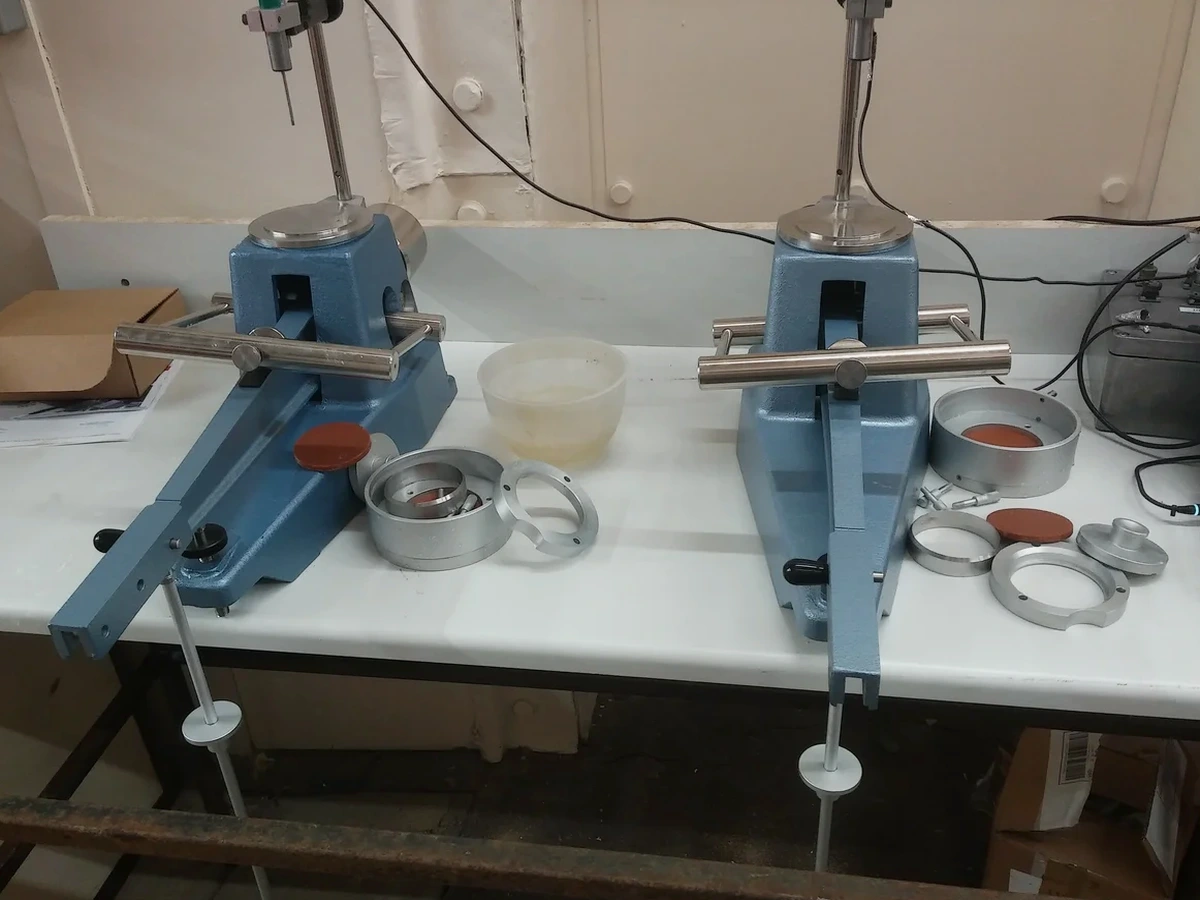
The regulatory framework governing laboratory testing in the Denver area is rooted in the International Building Code (IBC), as adopted and amended by the City and County of Denver. The Denver Building and Fire Code mandates that all geotechnical investigations, including laboratory analyses, be conducted under the responsible charge of a licensed Professional Engineer. Crucially, testing procedures must conform to recognized consensus standards, primarily those published by ASTM International. Common referenced standards include ASTM D422 for particle-size analysis, ASTM D4318 for Atterberg limits, and ASTM D4546 for swell testing. Compliance with these norms ensures data admissibility for permit review and provides a defensible basis for design recommendations submitted to local building departments.
The scope of laboratory testing is dictated by the project type and the anticipated soil behavior. For commercial and residential developments on expansive soils, a comprehensive program involving Atterberg limits to define plasticity characteristics and a grain size analysis (sieve + hydrometer) to establish the full particle-size distribution is essential. These two tests together form the basis of the Unified Soil Classification System (USCS) designation. High-rise structures or those with deep basements may require consolidation testing to predict settlement magnitudes and rates, while transportation infrastructure projects often demand resilient modulus and California Bearing Ratio (CBR) tests for pavement design. Environmental assessments frequently integrate laboratory analysis for contaminant transport modeling.
Common questions
What is the purpose of a geotechnical laboratory testing program in Denver?
The program quantifies the physical and mechanical properties of subsurface materials to support safe, cost-effective design. Given Denver's expansive clays and variable alluvial deposits, laboratory data is essential to classify soils, predict settlement and heave, and derive engineering parameters for foundations, retaining walls, and pavements.
Which ASTM standards are most commonly applied to laboratory testing in Denver?
Key ASTM standards include D422 for particle-size analysis, D4318 for Atterberg limits, D4546 for swell testing of expansive soils, and D2435 for consolidation. Adherence to these methods is required by the Denver Building Code to ensure consistent, defensible results for permit applications and design recommendations.
How do laboratory tests address Denver's expansive soil problems?
Tests such as Atterberg limits, hydrometer analysis, and swell-consolidation directly measure a soil's plasticity, clay fraction, and volume change potential. These results enable engineers to calculate anticipated heave pressures and recommend appropriate mitigation, such as drilled piers, void forms, or moisture conditioning.
When is a grain size analysis with a hydrometer necessary instead of a simple sieve analysis?
A full analysis including a hydrometer is required when fine-grained material (silts and clays) constitutes a significant portion of the sample. In Denver's claystone and shale formations, the hydrometer portion is critical for determining the clay-size fraction, which directly correlates with the soil's expansive potential and drainage characteristics.