In-situ testing forms the backbone of geotechnical site characterization in Denver, encompassing a range of field methods that evaluate soil and rock properties directly in their natural state without removing samples to a laboratory. These tests carry out real-time data on density, strength, permeability, and deformation characteristics that are essential for foundation design, earthwork quality control, and slope stability analysis. The category covers everything from traditional penetration tests to specialized geophysical measurements, all performed on location to minimize sample disturbance and capture the true behavior of subsurface materials under actual loading and moisture conditions.
Denver's unique geological setting makes in-situ testing particularly critical for construction projects throughout the metropolitan area. The city sits atop the Denver Basin, a structural depression filled with sedimentary deposits ranging from expansive Cretaceous shales of the Pierre Formation to Quaternary alluvial terraces along the South Platte River and its tributaries. Many areas feature highly plastic, swelling clay soils derived from weathered bedrock, which can exert significant uplift pressures on foundations if not properly characterized. Additionally, the region's semi-arid climate creates fluctuating moisture profiles that dramatically affect soil volume, making accurate field measurements of in-place density and moisture content essential for predicting long-term performance.
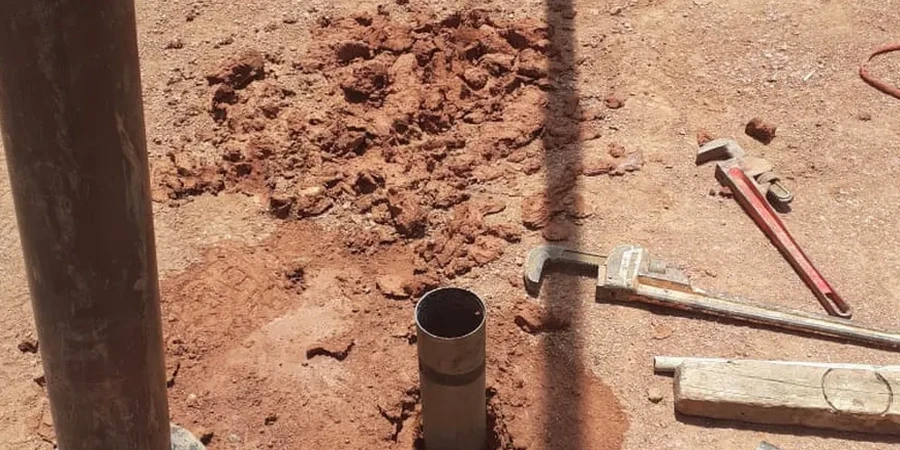
Local geotechnical practice follows national standards established by ASTM International and the American Association of State Highway and Transportation Officials (AASHTO), which are universally adopted across Colorado. Key specifications include ASTM D1556 for the field density test (sand cone method), ASTM D1586 for the Standard Penetration Test (SPT), and ASTM D6938 for nuclear gauge density measurements. The City and County of Denver Building Code references the International Building Code (IBC) Chapter 18, which mandates site-specific geotechnical investigations including in-situ testing for all commercial and multi-family structures. CDOT specifications govern transportation projects, requiring minimum frequencies of field density tests per lift of compacted fill based on project scale and material type.
The range of projects requiring in-situ testing in Denver spans from high-rise commercial developments in the Central Business District to residential subdivisions in suburbs like Aurora and Lakewood, where expansive soil mitigation is paramount. Infrastructure projects including light rail extensions, highway interchanges, and retaining walls along Cherry Creek rely heavily on field tests to verify design assumptions. Earth retention systems for deep excavations in urban settings demand accurate in-situ shear strength data, while landfill and environmental remediation sites require hydraulic conductivity measurements from field permeameter tests. Even smaller projects such as retaining walls, swimming pools, and residential additions benefit from basic field density verification to prevent future distress from settlement or heave.
Available services
Common questions
What is the purpose of in-situ testing compared to laboratory testing?
In-situ testing measures soil and rock properties directly in the ground, preserving natural stress conditions, moisture content, and structural features that laboratory samples often lose during extraction and transport. This approach provides more representative data for parameters like density, permeability, and deformation modulus, which are highly sensitive to disturbance. Field tests also allow evaluation of larger volumes of material and continuous profiling, complementing discrete laboratory samples for a complete geotechnical characterization.
When are in-situ tests required by Denver building codes?
The Denver Building Code requires geotechnical investigations including in-situ testing for all commercial, industrial, and multi-family residential projects. Earthwork operations involving structural fill must undergo field density testing at specified frequencies per ASTM or CDOT standards. Projects in areas with known expansive soils, high groundwater, or previous fill placement may require additional field testing such as pressuremeter or permeability tests to verify design assumptions before foundation construction proceeds.
How do Denver's expansive soils affect in-situ testing requirements?
Denver's expansive clay formations necessitate careful in-situ moisture and density profiling to predict potential heave and shrinkage. Field tests must capture seasonal moisture variations at depth, and compaction specifications often require placement at moisture contents slightly above optimum to minimize future swelling. In-situ suction measurements and swell pressure tests may supplement standard density tests in highly plastic Pierre Shale-derived soils to develop appropriate foundation design parameters.
What qualifications should a provider of in-situ testing services have in Colorado?
In-situ testing providers in Colorado should employ field technicians certified by programs such as NICET or ACI for density testing, with work supervised by a licensed Professional Engineer specializing in geotechnical engineering. The firm should maintain calibrated equipment per ASTM standards, carry appropriate liability insurance, and demonstrate expertise with Denver's specific geological conditions. CDOT prequalification may be required for publicly funded transportation projects.