Ground improvement in Denver represents a critical geotechnical discipline focused on modifying native soils to meet the demanding structural and performance criteria of modern construction. The city's rapid urbanization, driven by a booming population and expanding infrastructure, increasingly pushes development onto sites with marginal soil conditions that are unsuitable for conventional shallow foundations. This category encompasses a suite of engineering techniques designed to increase bearing capacity, reduce total and differential settlement, mitigate liquefaction potential, and accelerate the consolidation of weak, compressible strata. For developers and public agencies across the Front Range, investing in a robust improvement strategy is not merely a technical consideration; it is a fundamental risk-management and cost-control measure that directly influences the long-term viability of residential subdivisions, commercial high-rises, and critical transportation corridors.
Denver's geological setting at the western edge of the Denver Basin, where the Great Plains meet the Rocky Mountain foothills, creates a uniquely challenging subsurface profile. Much of the metropolitan area is underlain by significant deposits of alluvial sands and gravels from Cherry Creek and the South Platte River, which can be loose and prone to vibration-induced settlement. More critically, vast expanses east of downtown are covered by wind-blown loess and expansive claystone formations, such as the Denver Formation, which are notorious for their shrink-swell behavior and low strength when saturated. These collapsible and expansive soils demand specialized treatment to prevent the cracking of slabs and pavements. In the river corridors, the presence of a shallow groundwater table further complicates earthwork by requiring solutions that can densify loose, saturated sands, making techniques like vibrocompaction design highly relevant for deep densification.
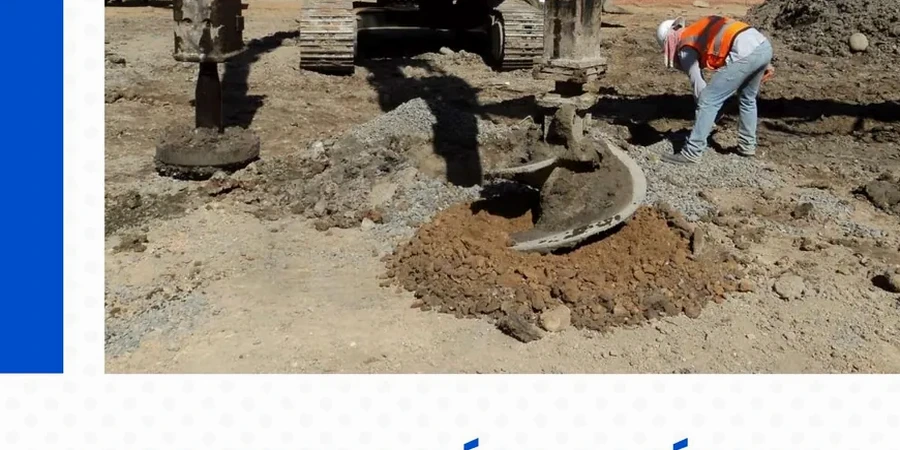
The regulatory framework governing geotechnical practice in Denver is anchored in the local amendments to the International Building Code (IBC), specifically the Denver Building and Fire Code. Chapter 18, which addresses soils and foundations, mandates thorough site characterization and often triggers the need for ground improvement when allowable bearing pressures cannot be met or predicted settlement exceeds tolerable limits. The City and County of Denver's Public Works department enforces strict grading and erosion control permits, requiring engineered reports that justify the selected improvement method. Furthermore, the Colorado Geological Survey provides essential guidance on regional hazards, including swelling soils and seismic activity, while the American Society of Civil Engineers (ASCE 7) and the local chapter of the American Council of Engineering Companies (ACEC Colorado) set the professional standard of care for performance-based design and verification testing, such as post-treatment cone penetration tests (CPT).
The application of ground improvement in Denver spans a diverse range of project types, each demanding a tailored approach. Large-footprint commercial warehouses and distribution centers in the Airport submarket frequently require deep foundations or rigid inclusions to support heavy floor loads over the area's variable alluvial deposits. Mid-rise structural frames in the Central Business District often rely on advanced solutions like stone column design to reinforce weak clays and silts, providing a cost-effective alternative to deep pile foundations. Infrastructure projects, including the expansion of the Regional Transportation District (RTD) light rail and major highway interchanges, systematically employ vibro techniques to stabilize embankments and bridge approaches. Even municipal water treatment plants and detention ponds necessitate improvement to ensure hydraulic conductivity and structural integrity on sites with liquefiable or highly compressible soils, underscoring the universal need for subsurface mitigation across the built environment.
Available services
Common questions
What is the primary goal of ground improvement in Denver's construction projects?
The primary goal is to modify native soils to increase bearing capacity, reduce settlement, and mitigate hazards like expansive or collapsible behavior. Given Denver's loose alluvial sands and swelling claystone formations, these techniques ensure that foundations and slabs perform reliably over time without excessive cracking or differential movement, protecting the structural investment.
When does the Denver Building Code require a ground improvement design?
A design is required when the geotechnical investigation reveals that allowable soil bearing pressures are inadequate or predicted settlements exceed the tolerable limits for the proposed structure. Chapter 18 of the Denver Building and Fire Code mandates engineered solutions for sites with uncontrolled fill, high groundwater, or soils with a significant expansion index.
How do local soil conditions influence the choice between stone columns and vibrocompaction?
The choice depends on the soil type. Vibrocompaction is ideal for densifying loose, clean sands with low fines content, common in Denver's river corridors. Stone columns are better suited for reinforcing cohesive soils like clays and silts, including the deep claystone formations, where they carry out drainage and increase shear strength through aggregate reinforcement columns.
What verification testing is typically mandated after ground improvement in Denver?
Post-treatment verification is essential and typically includes cone penetration tests (CPT), standard penetration tests (SPT), or pressuremeter tests to confirm that design density and strength parameters have been achieved. Denver building officials and geotechnical engineers often require modulus tests and load tests on stone columns to validate performance before foundation construction proceeds.